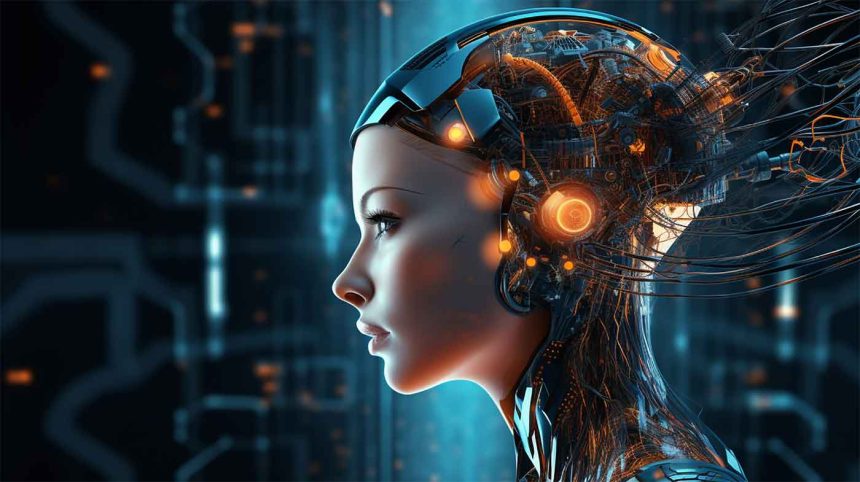
Artificial Technology role in Blockchain
In the rapidly evolving landscape of technology, Artificial Intelligence (AI) and blockchain stand out as two of the most transformative innovations of our time. Each, in its own right, has the potential to revolutionize industries and redefine how business and society operate. When combined, AI and blockchain offer a synergistic effect that can solve some of the most complex problems in various sectors. This article explores the rise of AI companies and their pivotal role in enhancing blockchain technology, drawing on accurate industry statistics and projections to illustrate this dynamic intersection.
Growth of Artificial Intelligence
The surge of AI companies can be traced to the exponential growth in computing power, advances in machine learning algorithms, and the vast amounts of data generated in the digital age. According to a report by PwC, AI could contribute up to $15.7 trillion to the global economy by 2030, with AI investments reaching over $100 billion by 2025, as noted by IDC. These companies are developing AI solutions that enhance efficiency, accuracy, and decision-making processes across various industries.
Blockchain Technology
Blockchain technology, introduced through Bitcoin in 2008, has evolved beyond its initial application in cryptocurrencies. It offers a decentralized, immutable ledger that can securely record transactions and data across a distributed network. The global blockchain market, valued at $3 billion in 2020, is projected to reach $39.7 billion by 2025, according to Markets and Markets. Blockchain’s potential to revolutionize industries such as finance, healthcare, supply chain, and beyond is widely recognized, but it also faces significant challenges such as scalability, interoperability, and data privacy.
AI Strategy
AI companies are stepping in to address these challenges, leveraging their expertise to enhance blockchain technology in several key areas. One of the most significant contributions of AI to blockchain is in the realm of data analysis and decision-making. Blockchain networks generate vast amounts of data, and AI’s ability to process and analyze this data in real-time is invaluable. AI algorithms can identify patterns, detect anomalies, and make predictions, enhancing the overall efficiency and security of blockchain networks. For example, in the financial sector, AI can analyze transaction data on blockchain to detect fraudulent activities and predict market trends. According to Juniper Research, AI-based fraud detection systems can save financial institutions up to $10 billion annually by 2023.
This capability is particularly important in cryptocurrency markets, where the decentralized nature of blockchain makes traditional fraud detection methods less effective. Another critical area where AI enhances blockchain is in improving scalability. One of the main criticisms of blockchain technology, particularly public blockchains like Bitcoin and Ethereum, is their limited scalability. AI algorithms can optimize transaction processing and network management, making blockchain networks more efficient and capable of handling higher volumes of transactions. For instance, AI can dynamically adjust the size of blocks in a blockchain or prioritize transactions based on network conditions, reducing congestion and improving throughput.
Benefits of AI
Interoperability between different blockchain networks is another challenge that AI can address. The proliferation of various blockchain platforms has led to a fragmented ecosystem, making it difficult for these networks to communicate and exchange data. AI can facilitate interoperability by creating intelligent protocols that translate and relay information between different blockchains. This capability is crucial for realizing the full potential of blockchain technology, enabling seamless data sharing and collaboration across different networks and platforms.
Data privacy and security are paramount concerns in blockchain technology, and AI offers robust solutions in this regard. AI algorithms can enhance the security of blockchain networks by continuously monitoring for potential threats and vulnerabilities. Machine learning models can predict and identify cyberattacks in real-time, allowing for swift countermeasures. Additionally, AI can enhance data privacy by implementing advanced encryption techniques and ensuring that sensitive information is protected while still being accessible for legitimate uses.
Added Benefits of AI
The rise of AI companies and their integration with blockchain technology is also fostering innovation in new business models and applications. For example, decentralized finance (DeFi) platforms, which leverage blockchain to offer financial services without traditional intermediaries, are increasingly incorporating AI to enhance their operations. AI-driven DeFi platforms can offer personalized financial advice, optimize investment strategies, and manage risks more effectively. According to DeFi Pulse, the total value locked in DeFi protocols surpassed $100 billion in 2021, highlighting the significant growth and potential of this sector.
Health Sector
Healthcare is another industry benefiting from the convergence of AI and blockchain. AI algorithms can analyze vast amounts of medical data on blockchain networks to identify trends, improve diagnostics, and personalize treatment plans. Blockchain ensures that this sensitive data is securely stored and shared among healthcare providers, enhancing patient privacy and data integrity. A report by Allied Market Research projects that the global blockchain in healthcare market will reach $16.3 billion by 2028, driven in part by the integration of AI technologies.
Supply Chain
Supply chain management is yet another area where AI and blockchain are making a significant impact. Blockchain’s ability to provide a transparent and immutable record of transactions is complemented by AI’s ability to analyze and optimize supply chain operations. AI can predict demand, optimize inventory levels, and identify inefficiencies, while blockchain ensures that all transactions are accurately recorded and verifiable. This combination enhances the efficiency and reliability of supply chains, reducing costs and improving customer satisfaction. According to Gartner, 30% of manufacturing companies with more than $5 billion in revenue will have implemented AI in their supply chain operations by 2025.
The environmental impact of blockchain technology, particularly its energy consumption, is a growing concern. AI can help mitigate this issue by optimizing the energy usage of blockchain networks.
Machine learning algorithms can predict and manage energy consumption, ensuring that blockchain operations are more sustainable. For instance, AI can optimize the proof-of-work (PoW) consensus mechanism used by many blockchain networks, reducing the computational power required and thus the energy consumed. According to the Cambridge Centre for Alternative Finance, Bitcoin mining alone consumes around 110 terawatt-hours per year, underscoring the need for more efficient and sustainable solutions.
AI Challenges
Despite the significant advancements and potential of AI and blockchain, there are still challenges to be addressed. The ethical use of AI, particularly in ensuring fairness and avoiding bias, is a critical concern. AI companies must implement robust governance frameworks and ethical guidelines to ensure that their technologies are used responsibly. Additionally, the regulatory landscape for both AI and blockchain is still evolving, and companies must navigate complex and often fragmented regulatory environments. Collaboration between industry stakeholders, policymakers, and regulatory bodies is essential to create a supportive and consistent regulatory framework that fosters innovation while protecting consumers.
The rise of AI companies and their role in enhancing blockchain technology is also driving significant investments and partnerships. According to CB Insights, global funding for AI startups reached $26.6 billion in 2020, while blockchain startups attracted $4.3 billion in funding. Many of these investments are focused on companies that are developing AI solutions for blockchain applications, highlighting the growing recognition of the potential of this convergence. Additionally, partnerships between AI companies and blockchain startups are becoming increasingly common, as they combine their expertise to create innovative solutions and drive adoption.
Closing Thoughts
The integration of AI with blockchain will continue to evolve, as new applications and use cases emerge in future. Development of more advanced AI technologies such as quantum computing and neuromorphic computing will further elevate the capabilities of blockchain networks. Quantum computing, for example, can change cryptography and security in blockchain making it virtually unbreakable. On the other hand, neuromorphic computing that imitates neural networks found in a human brain can increase efficiency and scalability of AI algorithms thereby promoting their better integration within blockchain. In this case, IoT has also a lot of potential in terms of combining with AI and blockchain.
The number of connected devices is rising continuously, which makes protection and integrity necessary for the data generated by these things. While AI can analyze and optimize IoT data, the Blockchain could offer a reliable track record for all transactions made. These connections will improve on efficiencies while enhancing security on IoT systems so as to allow novel applications and business models about smart cities, self-driving cars or industrial automation.
AI companies and their integration with blockchain technology is driving significant advancements and transforming industries across the globe. Through enhanced data analysis, improved scalability, interoperability, and security,
AI is addressing some of the most critical challenges facing blockchain technology. The convergence of AI and blockchain is fostering innovation, creating new business models, and unlocking unprecedented opportunities in sectors such as finance, healthcare, supply chain management, and beyond.
As investments in AI and blockchain continue to grow and new technologies emerge, the future holds immense potential for this dynamic intersection, paving the way for a more efficient, secure, and interconnected world.